
#1 On-Camera Acting Studio for the Learning and Creating of Emotions and Emotional Expression.| The Only Acting Studio Where the Science of Emotion Meets Artistic Expression.
June 30, 2011


June 29, 2011
Personal Display Rules: Jim Carrey in Fun with Dick and Jane: Elevator Scene
Starts @ 1:00 minute into Fun with Dick & Jane...I think this pretty much sums it up:
June 28, 2011
Personal Display Rules: Patsy Rodenburg: Why I Do Theater
The whole talk is phenomenal, but at about 3 minutes in, Ms. Rodenburg recounts a story about a man who didn't like the theater. He and his wife went to a play once and "There was this actress...she made a sound...it was really embarrasing."
The shift from how he begins in that story to how he ends that story is incredible and heart-breaking.
Patsy Rodenburg: Why I do theater | Video on TED.com
The shift from how he begins in that story to how he ends that story is incredible and heart-breaking.
Patsy Rodenburg: Why I do theater | Video on TED.com
June 26, 2011
Personal Display Rules: Alex's Personal Journey...
Normally, I post as John's admin, but given this week's subject matter (Personal Display Rules), I thought I could illustrate the point better by letting you know a bit more about me and how I (Alexandra McDougall) got into studying this topic.

Photo credit: http://www.billstrongphotography.com/ (from my summer Circle in the Square Theatre School, back in 2003…)
This was my first real headshot; my facial expression in headshots has changed little since I first started acting, despite the fact that I have changed the way I try to present myself to the world. As a senior in high school, one of my quotes was “The robb’d that smiles steals something from the thief / He robs himself that spends a bootless grief” from Shakespeare's Othello. I was basically telling everyone that no matter what they did to hurt me, piss me off or otherwise agitate me, I’d stay stone-faced, or smile…just to spite them.
This may explain a lot about the facial tension that I have been holding for years, and thus, the way that I have been presenting myself to friends colleagues and potential collaborators. Part of it started because I have a jaw problem, called TMJ, that hurts (especially in winter, and I am from Boston), so I generally hold a lot of tension in my jaw and mouth.
I tend to smile from one side of my mouth. I never thought this was a really big deal; sure, it ticked off my family something fierce, whenever there was a family fight, but they have to love me.
One hour after meeting John Sudol for a free class on Mastering the Reaction Shot, my mind was reeling with the understanding that I have been projecting contempt, for years, to all of my loved ones. Contempt, of all things! Apparently, smiling from half of your face means that one half of your brain is experiencing something while the other side is thinking about that experience, and judging it. Well, that sent me trying to:
Later that day, I sent him an e-mail and I have been trying to remain conscious of my facial reactions ever since.
It’s been a long journey so far, and my facial muscles definitely need a work out, specifically my eyebrow muscles, but I know that studying this has helped me to communicate better and audition with more confidence.

Photo credit: http://www.billstrongphotography.com/ (from my summer Circle in the Square Theatre School, back in 2003…)
This was my first real headshot; my facial expression in headshots has changed little since I first started acting, despite the fact that I have changed the way I try to present myself to the world. As a senior in high school, one of my quotes was “The robb’d that smiles steals something from the thief / He robs himself that spends a bootless grief” from Shakespeare's Othello. I was basically telling everyone that no matter what they did to hurt me, piss me off or otherwise agitate me, I’d stay stone-faced, or smile…just to spite them.
This may explain a lot about the facial tension that I have been holding for years, and thus, the way that I have been presenting myself to friends colleagues and potential collaborators. Part of it started because I have a jaw problem, called TMJ, that hurts (especially in winter, and I am from Boston), so I generally hold a lot of tension in my jaw and mouth.
I tend to smile from one side of my mouth. I never thought this was a really big deal; sure, it ticked off my family something fierce, whenever there was a family fight, but they have to love me.
One hour after meeting John Sudol for a free class on Mastering the Reaction Shot, my mind was reeling with the understanding that I have been projecting contempt, for years, to all of my loved ones. Contempt, of all things! Apparently, smiling from half of your face means that one half of your brain is experiencing something while the other side is thinking about that experience, and judging it. Well, that sent me trying to:
- figure out how this has been affecting my relationships
- understand what this does to my marketing efforts, as I thought I was presenting myself as “bright, warm and vivacious"
- study with John, at all costs.
Later that day, I sent him an e-mail and I have been trying to remain conscious of my facial reactions ever since.
It’s been a long journey so far, and my facial muscles definitely need a work out, specifically my eyebrow muscles, but I know that studying this has helped me to communicate better and audition with more confidence.
June 25, 2011
June 22, 2011
Cultural Display Rules: "Real Men Don't Cry"
Ocean's 13 does a great job of showing a cultural display rule; "Real Men Don't Cry."
http://youtu.be/fpu4OHOjTRA
Another great video contrasts with the male display rules, and it comes to us from A League of Their Own.
http://youtu.be/tPqYnC-SW5w
(Embedding not possible, you'll have to click on the links yourselves.)
http://youtu.be/fpu4OHOjTRA
Another great video contrasts with the male display rules, and it comes to us from A League of Their Own.
http://youtu.be/tPqYnC-SW5w
(Embedding not possible, you'll have to click on the links yourselves.)
June 21, 2011
Research on Cultural Display Rules: Japan vs. America
"The Japanese men used smiles to cover up their negative expressions much more often than the American men (Ekman, 1972, Friesen, 1972).
To investigate further the meaning of those differences, Matsumoto and Kudoh (1993) obtained ratings from Japanese and Americans on smiling versus non-smiling (i.e., neutral) faces with regard to intelligence, attractiveness, and sociability. Americans rated smiling faces as more intelligent than neutral faces; the Japanese, however, did not. Americans and Japanese both found smiling faces more sociable than neutral faces, but for the Americans the difference was to a greater degree. These differences suggest that cultural display rules cause Japanese and Americans to attribute different meanings to the smile, and serve as a good explanation for perceived major differences in communication styles across cultures."
http://teachpsych.org/resources/e-books/faces/script/Ch05.htm
To investigate further the meaning of those differences, Matsumoto and Kudoh (1993) obtained ratings from Japanese and Americans on smiling versus non-smiling (i.e., neutral) faces with regard to intelligence, attractiveness, and sociability. Americans rated smiling faces as more intelligent than neutral faces; the Japanese, however, did not. Americans and Japanese both found smiling faces more sociable than neutral faces, but for the Americans the difference was to a greater degree. These differences suggest that cultural display rules cause Japanese and Americans to attribute different meanings to the smile, and serve as a good explanation for perceived major differences in communication styles across cultures."
http://teachpsych.org/resources/e-books/faces/script/Ch05.htm
June 20, 2011
Research on Cultural Display Rules: Russians Never Smile In Public
It's tough to find a photo of a cultural display rule in action, so in this instance, a fun article from Psychology Today is filling in for Photo/Video Monday.
http://www.psychologytoday.com/articles/200901/global-psyche-national-poker-face
http://www.psychologytoday.com/articles/200901/global-psyche-national-poker-face
June 19, 2011
Cultural Display Rules
Going back to the idea that we don’t all speak the same emotional language, different cultures add their own distortions to the list of things that individuals may not feel comfortable revealing. Look at any Oscar nominee who loses. Why do they smile? Surely they are not genuinely happy that someone else earned the accolades. The losing artist is masking their displeasure by hiding it with a smile. Culturally, American men aren’t allowed to express fear or sadness; women are not allowed to express anger. The culture we are raised in colors how we are socially allowed to project our inner feelings.
June 18, 2011
Introvert vs. Extrovert: Quiz
Are you unsure of your status as an introvert or an extrovert? There are plenty of quizzes online to help.
http://www.psychologytoday.com/blog/quiet-the-power-introverts/201103/quiz-are-you-introvert-or-extrovert-and-why-it-matters
http://www.humanmetrics.com/cgi-win/jtypes2.asp
http://www.psychologytoday.com/blog/quiet-the-power-introverts/201103/quiz-are-you-introvert-or-extrovert-and-why-it-matters
http://www.humanmetrics.com/cgi-win/jtypes2.asp
June 17, 2011
Community Involvement Friday: Stories of Introversion vs. Extroversion
How has being introverted or extroverted affected your career? Do you feel that auditions are skewed towards the other personality type? Do you think that playing the Hollywood game of meeting people and going out to events is a selection bias that helps extroverts succeed faster than introverts? How do you compensate for this, or do you?
More specifically applied to the face and how we express ourselves, extroverts are usually too big & introverts too small.
More specifically applied to the face and how we express ourselves, extroverts are usually too big & introverts too small.
How do these comments make you feel? What concerns do you have when you go on an audition or go about your work? How do you adapt?
Do you feel more comfortable on stage rather than on camera?
As an actor do you feel more comfortable on stage as opposed to the camera?
June 16, 2011
"...who I am gets in the way of people looking innocently at the parts I play.”
“Acting is about giving something away, handing yourself over to whatever role you are asked to play. I'm not hiding or escaping or seeking anonymity. I reserve the right not to have a rubber stamp on my forehead saying this is who I am. Because who I am gets in the way of people looking innocently at the parts I play.” - Alan Rickman
June 15, 2011
Article on Introverts vs. Extroverts
Some people who are tough to read might just be introverts. If you find yourself playing a character that is your natural opposite, there are plenty of resources available to help you understand the character's inner life. This article from Psychology Today is on the differences between introverts and extroverts.
http://www.psychologytoday.com/articles/201008/revenge-the-introvert
http://www.psychologytoday.com/articles/201008/revenge-the-introvert
June 14, 2011
Subtext vs. Distortion
"When there is a difference between what we say and what we reveal, that is subtext. When you distort what you reveal, there is a difference between your character’s subtext and your subtext." - John Sudol
June 13, 2011
Kobe Bryant, Shaquille O'Neal fear NBA commercial
What's interesting to me about the video, at 25 second in, when both say "I like the fear", if you freeze it you can see a little more of their personality - Kobe has a devlish smile and Shaq leaks disgust...
June 12, 2011
How We Are Wired...
PROBLEMS WITH EMOTIONAL EXPRESSION?
Some actors are consistently told that their acting is too big or too small. You might have heard an acting teacher say, “I'm not getting what you're feeling” or “you're too busy; stop moving your eyebrows.”
For years, I struggled to help actors who seemed to be either withholding what they were feeling or displaying something other than what they said they were feeling. Both types of actors were having a problem with expression and I was at a loss as to what to do about it.
My thoughts had always been that there was a flaw in how they were approaching the work. They weren't doing it correctly. Why wouldn’t this be the answer? There were plenty of other actors who didn’t have this problem.
I came upon some very interesting research that changed how I taught actors the craft of acting. I discovered that when it came to emotional reveal, which includes reactions, the playing field wasn't leveled. There are some actors who were born to do it better. If you are one of those actors I described earlier, the problem may not be with your dedication to the craft, but how you are wired.
THE SCIENCE
Science has shown that 10 hours after birth, babies are already exhibiting signs of either being an introvert or extrovert when it comes to expressiveness. Some babies are much more expressive while others remain stoic. Depending on if the parents are introverts or extroverts, the child will continue on its introverted or extroverted path.
Interestingly for the actor with problems of revealing too much or too little, scientists have hooked introverts and extroverts up to a machine to see just how intensely each was feeling a given emotion: Under a moderate amount of stimuli, the extrovert was showing more emotional facial expression than the introvert, but the introvert was actually feeling more intensely than the extrovert. When they raised the stimuli, the introvert started to shut down and the extrovert calmed down.
Think about it: how you communicate with your face, now, was established at birth. This is not a psychological problem or an acting problem. It's a difference in your wiring.
June 11, 2011
Celebs who have pledged to lay off the botox.
Botox kills an actor's ability to move their facial muscles, ergo, botox prevents an actor from communicating. Why would you pay someone to prevent you from being able to work?
These celebrities have pledged to not use botox...whether that is true or (collagen-plumped) lip service is another issue... http://www.ocregister.com/articles/botox-291906-free-hollywood.html?pic=0
----
Does anyone have any good stories of seeing an actor with a distracting amount of facial surgery or immobile facial muscles?
These celebrities have pledged to not use botox...whether that is true or (collagen-plumped) lip service is another issue... http://www.ocregister.com/articles/botox-291906-free-hollywood.html?pic=0
----
Does anyone have any good stories of seeing an actor with a distracting amount of facial surgery or immobile facial muscles?
June 10, 2011
The Job That Got Away
About 20 years ago, I was at an audition, working with a director who was trying to get me to do a specific emotional reveal (reaction). He loved everything but needed to get this specific moment from me.
He was coaching me with what I call ”romantic language,” words and stories intended to stimulate you. ”You just lost the love of your life” or ”you just booked the role of a lifetime,” etc. The language he used really stimulated me, but when I did the read, the response I got from him was a tight-lipped smile and ”thanks.” I failed to produce the reaction he wanted.
I was a trained actor who had worked before; why did I not have the tools to give him what he was asking for?
Although frustrated, the seed for my future work had been planted. I would come to realize that we don’t all speak the same emotional language. The images that director was giving impacted him one way and me another. Was the craft of acting that hit or miss?
----
Does anybody else have this experience or find themselves in a similar situation? Post a comment and share with us "the job that got away."
----
Does anybody else have this experience or find themselves in a similar situation? Post a comment and share with us "the job that got away."
June 9, 2011
Will Smith, on the importance of acting to an "X"
Fast forward to around 8:37 to hear James Lipton & Will Smith talk about the importance of “Acting to an X.” Green screen and special effects work are reaction shot acting moments at their best…
http://youtu.be/XeYYnPqlVKM
(Inside the Actor's Studio specifically requested that the embedding feature be disabled, so you'll have to go to the link directly.)
http://youtu.be/XeYYnPqlVKM
(Inside the Actor's Studio specifically requested that the embedding feature be disabled, so you'll have to go to the link directly.)
June 8, 2011
How This All Began...
When I got into casting, the hardest thing for most actors to do was come in, see an ”X” written on a piece of paper taped to the wall, and give a specific reaction to it. Over the years, I saw the same actors repeatedly come in for callbacks and booking the spots. The question that came to my mind was: “What were they doing differently than everyone else?” So I studied them. What I noticed was that 4 things occurred consistently:
- the actor produced a recognizable facial reaction
- the reaction was appropriate to the situation
- the actor produced a single reaction at a time
- the reaction was repeatable.
The fact that it was repeatable implied to me that there was an unidentified, and therefore, overlooked skill involved. Somehow these actors who were booking had the ability to interpret the circumstances given to them and react in a recognizable and appropriate way and I was determined to find out how. Over the next 8 years or so the answer came.
The Language of the Face, simply put, is the non-verbal means by which we communicate what we feel and think through specific emotional facial expressions. Although similar to body language interpretation, they are not the same. The science has shown us that the body tells us how well we are coping with an emotion; the face is the source by which we read it.
What I am talking about is not to be confused with ”face acting.” It is the direct result of thought and feeling. With over 140,000 permutations of facial expressions, the face is the densest source of information that we use to communicate.
The Language of the Face is based on the 7 human universal emotions. Anywhere on the planet, people will recognize and reveal with the same muscle groups:
surprise:
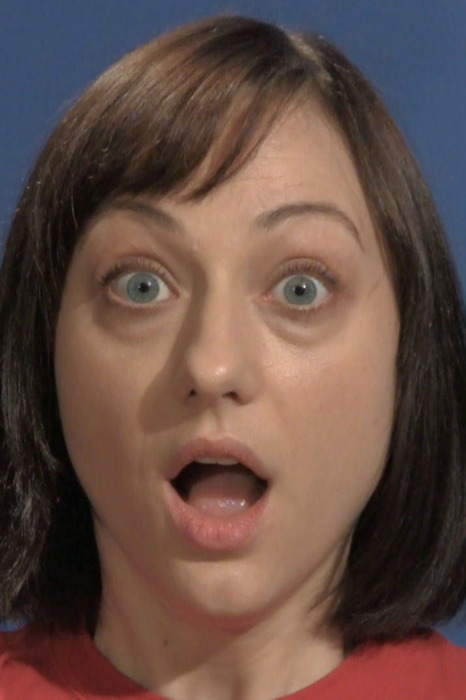
fear:
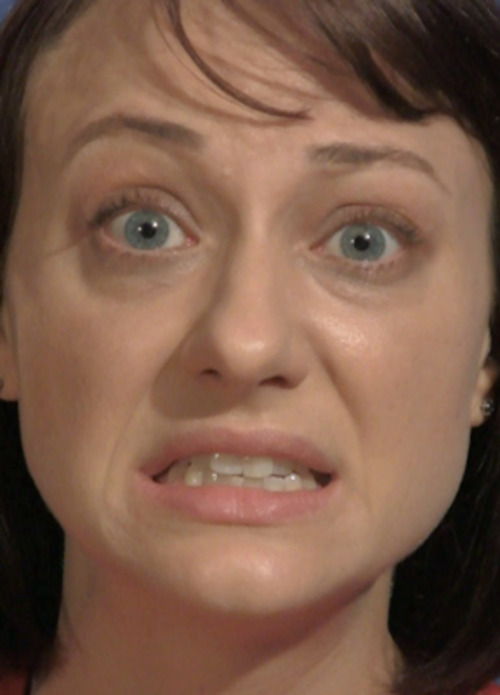
sad:

disgust:
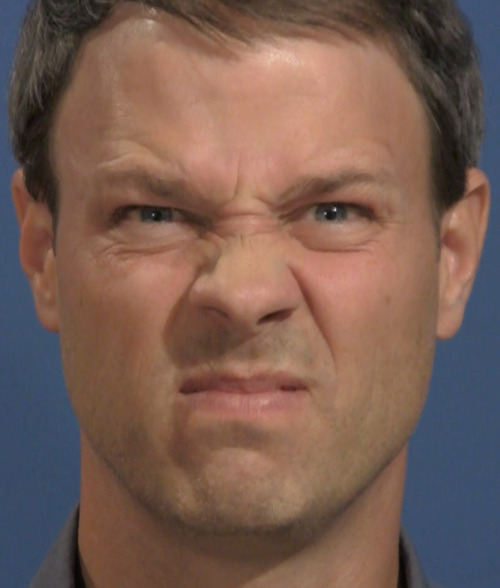
happy:

contempt:

anger:
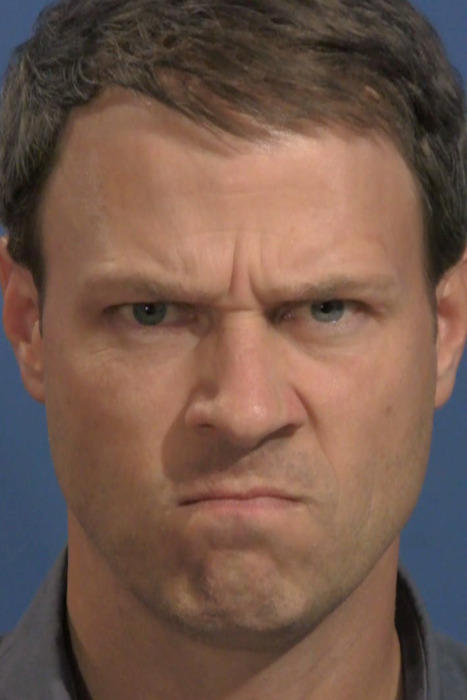
The actor who wants to work consistently, in front of the camera, needs to understand and create complex human emotions and reveal them in a visually recognizable way, on cue.
To speak the Language of the Face the actor must:
· Recognize how they personally reveal emotion
· Understand the nature of emotions
· Know what emotions look like on your face
When it comes to emotional reveal or specific reactions, the playing field is not leveled. Some actors where born to do it better. You can level it by understanding the Language of the Face.
Subscribe to:
Posts (Atom)